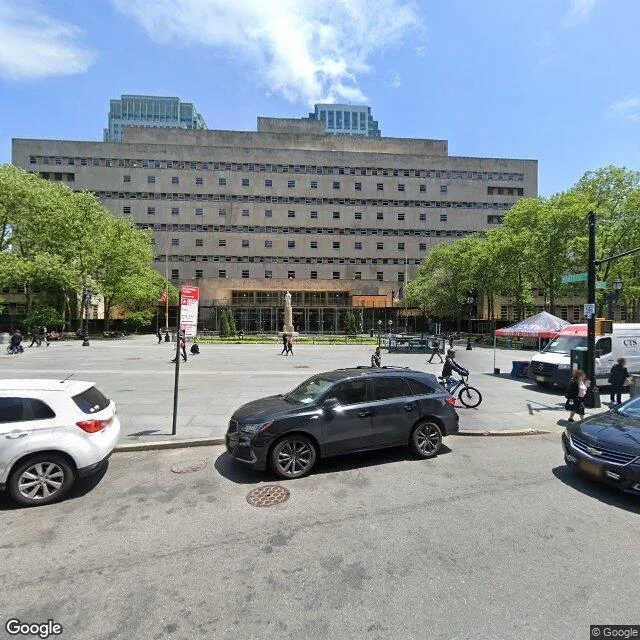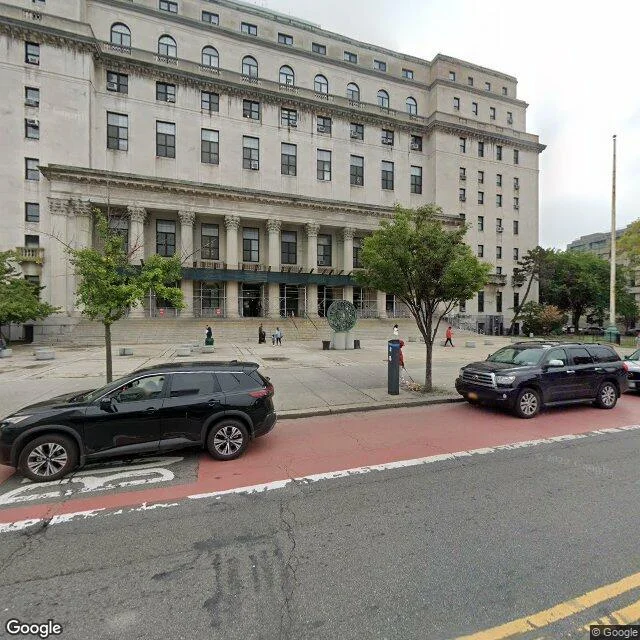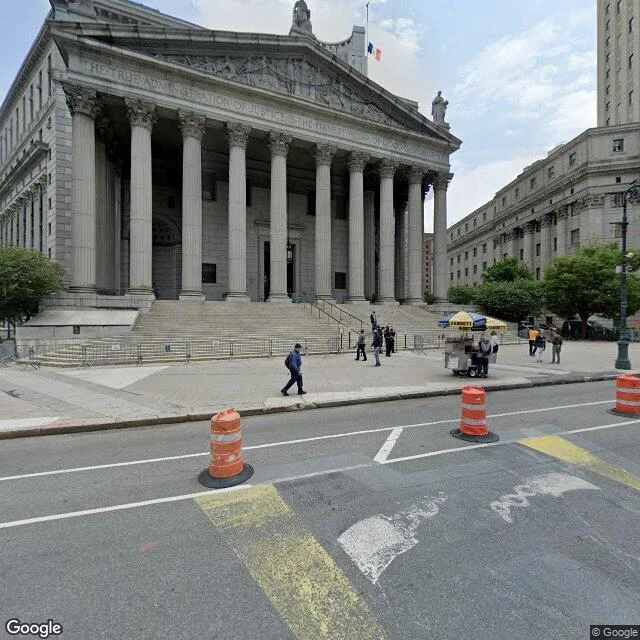





Millions of documents processed every year

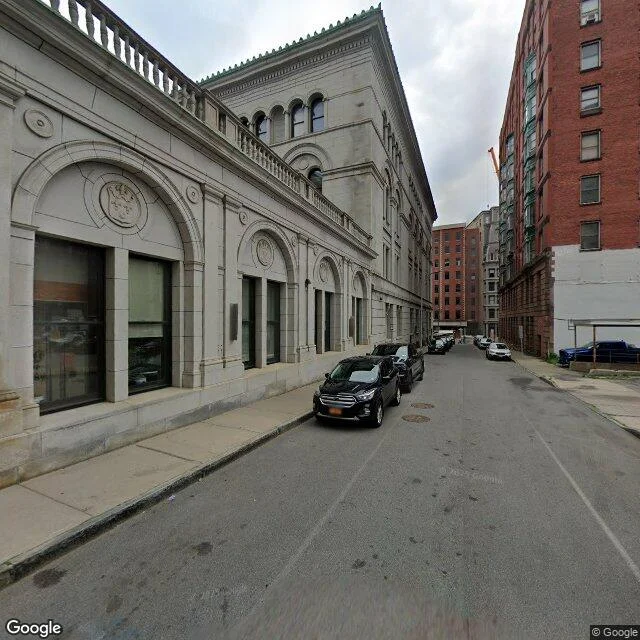
New York

New York began as a Dutch trading colony, blossoming around iconic landmarks like Manhattan’s harbor and the Erie Canal. Over centuries it transformed into a global hub of finance, media, technology, healthcare, and life‑sciences. Today its dynamic talent pool, world‑class institutions, and innovative ecosystem fuel relentless growth and abundant opportunities for visionary businesses.

About New York

New York is the third-largest U.S. state economy and the financial center of the country, anchored by Wall Street, professional services, healthcare, media, real estate, life sciences, and a globally significant New York City metro. Its 62 counties range from dense five-borough urban housing stock and high-value Long Island and Westchester suburbs to upstate small cities and rural Adirondack and Southern Tier markets where price points, foreclosure dynamics, and tax climates differ sharply. Operating conditions are shaped by strong tenant protections, robust rent regulation in NYC, judicial foreclosure with the 2022 Foreclosure Abuse Prevention Act (FAPA), high property and transfer taxes, slow but steady out-migration, and aggressive state-level housing policy under Governor Hochul. The result is a market with lower foreclosure volume but very high per-case dollar value, deep surplus and probate opportunities in the boroughs and suburbs, and meaningful tax-deed and discount activity upstate.New York began as a Dutch trading colony, blossoming around iconic landmarks like Manhattan’s harbor and the Erie Canal. Over centuries it transformed into a global hub of finance, media, technology, healthcare, and life‑sciences. Today its dynamic talent pool, world‑class institutions, and innovative ecosystem fuel relentless growth and abundant opportunities for visionary businesses.

How it works in New York

Governing law & venue

  • New York Surrogate's Court Procedure Act (SCPA) and Estates, Powers and Trusts Law (EPTL).
  • Filed in the Surrogate's Court of the county where the decedent was domiciled.
  • Each of the 62 counties has its own Surrogate's Court (NYC has one in each borough).

Main paths

  • Probate (testate) under SCPA Article 14 — court admits the will and issues letters testamentary to the executor.
  • Administration (intestate) under SCPA Article 10 — court issues letters of administration to the closest distributee under EPTL 4-1.1.
  • Voluntary administration / small estate under SCPA Article 13 — available when personal property is $50,000 or less and there is no real property. Filed by affidavit; no formal fiduciary appointment.

Family protections

  • EPTL 5-3.1 family exemption sets aside up to roughly $25,000 cash plus a vehicle, household items, and certain personal items for the surviving spouse or minor children, outside the small-estate cap.
  • EPTL 5-1.1-A spousal right of election — surviving spouse may elect against the will for the greater of $50,000 or one-third of the net estate.

Creditors & timing

  • Creditors generally have 7 months from issuance of letters to present claims under SCPA §1802.
  • Uncontested estates frequently take 6–12 months; contested probates and kinship proceedings can run multiple years.

Why it matters for operators

  • Voluntary administration's no-real-property limit means most New York homes still require full administration or probate — creating consistent title and heirship work.
  • Brooklyn, Queens, Bronx, and Westchester Surrogate's Courts are some of the busiest in the country, generating heavy volume of inherited multifamily and 1–4 family deal flow.
  • Spousal election, kinship, and unknown-heir issues regularly intersect with foreclosure, surplus claims, and tax-lien sales upstate.
See probate services →

Governing law & venue

  • New York is a judicial foreclosure state for residential mortgages.
  • Mortgage foreclosure: RPAPL Article 13 (§§1301–1393).
  • Pleadings, statute of limitations, and amendments: CPLR Article 2 and §213(4) (six-year SOL).
  • Filed in Supreme Court of the county where the property is located.

Pre-foreclosure notices

  • RPAPL §1304 — 90-day pre-foreclosure notice for owner-occupied 1–4 family homes and co-ops.
  • RPAPL §1303 — "Help for Homeowners in Foreclosure" notice on colored paper, served with the summons and complaint.
  • RPAPL §1306 — step filing with the Department of Financial Services.

Filing, service & settlement conference

  • Plaintiff files a summons, complaint, lis pendens (CPLR Article 65), and certificate of merit (CPLR §3012-b).
  • Borrower has 20–30 days to answer (depending on service).
  • CPLR §3408 mandatory settlement conference for owner-occupied 1–4 family homes and co-ops — a major source of delay in NYC and the metro.

Foreclosure Abuse Prevention Act (FAPA)

  • Signed Dec. 30, 2022; significantly tightened the six-year statute of limitations under CPLR §213(4) in the borrower's favor.
  • Estops lenders from arguing a prior accelerated action did not validly accelerate the loan, absent express judicial determination.
  • Constitutionality affirmed by the New York Court of Appeals on Nov. 25, 2025 (Article 13, LLC v. LaSalle).
  • The U.S. Supreme Court denied cert in U.S. Bank v. Fox on Oct. 6, 2025, leaving FAPA fully operative.

Judgment, referee & sale

  • Court issues an order of reference, then a judgment of foreclosure and sale appointing a referee.
  • Sale is conducted by the referee, typically at the courthouse; a remote-bidding pilot has been authorized in Queens, Monroe, and Niagara counties, with broader judicial-district adoption underway.
  • Successful bidder pays a 10% deposit at sale; closing follows under the terms of sale.

Surplus & post-judgment

  • Distribution of proceeds: RPAPL §1354.
  • Referee's report of sale and confirmation: RPAPL §1355.
  • Surplus money proceeding: RPAPL §1361 (notice of claim filed before confirmation; reference to determine priorities).
  • Deficiency judgment: RPAPL §1371 (90-day window, fair-market-value cap).
  • Post-judgment zombie-property timeline: 90 days to auction, 180 days to list (RPAPL §§1351, 1353).

Practical timing & 2025 context

  • Statewide filing-to-sale: typically 2–4 years in defended cases, less in defaulted upstate matters.
  • NY had 13,664 foreclosure starts in 2025, fifth-highest in the nation, and the NYC metro led all metros with 14,189 starts and 1,462 REOs (ATTOM 2025 year-end report).
  • Activity is concentrated in Brooklyn, Queens, Bronx, Nassau, Suffolk, and Westchester, with rising 2-family and small commercial filings.
See foreclosure services →

Governing law & venue

  • New York Real Property Actions and Proceedings Law: RPAPL Article 7 (summary proceedings) and §711 (nonpayment, holdover).
  • Real Property Law: RPL §232-a (NYC month-to-month) and §232-b (outside NYC), with longer notice tiers under the 2019 Housing Stability and Tenant Protection Act (HSTPA).
  • Filed in NYC Housing Court (Civil Court — Housing Part), city courts, district courts (Nassau/Suffolk), or local town/village justice courts.

Required notices

  • Nonpayment — written 14-day rent demand under RPAPL §711(2).
  • Holdover / lease violation — typically a 10-day notice to cure plus a notice to terminate.
  • No-cause / market-rate non-renewal — 30 / 60 / 90-day notice tiers based on length of occupancy under RPL §226-c.
  • Rent-stabilized / regulated units — layered notice and good-cause rules.

Service & filing

  • Notice of petition and petition served under RPAPL §735 (personal, substituted, or conspicuous-place / "nail and mail").
  • Tenant's response window typically 10–17 days from service depending on method.

Hearing & judgment

  • Judges actively encourage settlements; many cases resolve through stipulations.
  • If landlord prevails, court issues a judgment of possession and a warrant of eviction.
  • Marshals (NYC) or sheriff (outside NYC) execute the warrant; tenants must receive a 14-day notice before the marshal or sheriff can perform the eviction.

Practical timing

  • NYC nonpayment cases commonly take 6–12+ months end-to-end given calendar congestion.
  • Upstate justice and city courts often resolve nonpayment in 2–4 months for clean defaults.
  • ERAP, prior pandemic-era stays, and ongoing rent-stabilization defenses can extend timelines further.

Why it matters for operators

  • New York is one of the most tenant-protective regimes in the country.
  • Modeling carrying costs, vacancy assumptions, and post-foreclosure occupancy is essential before underwriting NY 1–4 family or small multifamily acquisitions, especially in NYC and Westchester.
See eviction services →

Governing law & venue

  • New York Real Property Actions and Proceedings Law: RPAPL Article 15 (§1501 et seq.) — "Action to compel the determination of a claim to real property."
  • RPAPL §1501(4) — specific statutory hook to cancel and discharge a mortgage barred by the six-year statute of limitations.
  • Filed in Supreme Court of the county where the property is located.

Common use cases

  • Time-barred / FAPA-affected mortgages still on record.
  • Forged or fraudulent deeds and "deed theft" matters (especially in Brooklyn and Queens).
  • Tax-deed and tax-lien purchase cleanup, particularly upstate.
  • Adverse possession and boundary disputes.
  • Heirship gaps, missing or unknown distributees, and stale liens.

Procedure

  • Plaintiff files a summons and complaint alleging actual or constructive possession and a removable cloud.
  • Property identified by block and lot or metes-and-bounds.
  • Known parties served personally; unknown claimants by service by publication with court order.
  • Case proceeds by default or contested motion practice; ends with a judgment that is recorded with the county clerk to clear title.

Practical timing

  • Uncontested matters: roughly 6–12 months, longer if publication, kinship, or guardian ad litem appointments are required.
  • Contested cases (deed theft, adverse possession) can extend well beyond a year.

Why it matters for operators

  • Quiet title is the practical bridge between a tax-deed or auction product and an insurable, marketable interest in New York.
  • Combined with FAPA's tightened SOL, RPAPL §1501(4) actions have become a meaningful tool for clearing stale residential mortgages from title across NYC and the suburbs.
See real estate services →

Federal districts

  • Southern District of New York (SDNY) — Manhattan, Bronx, Westchester, Rockland, Putnam, Dutchess, Orange, Sullivan.
  • Eastern District of New York (EDNY) — Brooklyn, Queens, Staten Island, Nassau, Suffolk.
  • Northern District of New York (NDNY) — Albany, Syracuse, Utica, Binghamton, the North Country.
  • Western District of New York (WDNY) — Buffalo, Rochester, the Southern Tier.

Most common chapters

  • Chapter 7 — liquidation with discharge of unsecured debts.
  • Chapter 13 — 3–5 year repayment plan; commonly used to cure mortgage arrears and stop New York's long judicial foreclosures.

Automatic stay (11 U.S.C. §362)

  • Triggered at filing; freezes foreclosure auctions, evictions in many cases, garnishments, and most collection activity.
  • Lifts on dismissal, motion for relief, or discharge.

New York exemption scheme — elective

  • New York is an opt-in state: debtors may choose either the federal exemptions under 11 U.S.C. §522(d) or the New York scheme under Debtor & Creditor Law §§282–283, CPLR §5205, and CPLR §5206.
  • Homestead exemption (CPLR §5206) — tiered by county, periodically inflation-adjusted by the Department of Financial Services:
  • Highest tier (Bronx, Kings, Queens, NY, Richmond, Nassau, Suffolk, Rockland, Westchester, Putnam) — approx. $179,975 per debtor.
  • Middle tier (Dutchess, Albany, Columbia, Orange, Saratoga, Ulster) — approx. $149,975 per debtor.
  • Remaining counties — approx. $89,975 per debtor.
  • Joint owners can stack their exemptions on the same residence.
  • CPLR §5205 — personal property exemptions (motor vehicle, household goods, tools of trade, retirement accounts, wages).

Why it matters for operators

  • Chapter 13 is heavily used in NY to stretch and cure judicial foreclosures, often in tandem with FAPA defenses.
  • Homestead tiers materially affect short-payoff math and surplus expectations on appreciated NYC and downstate homes.
  • Early read on the borrower's likely chapter and exemption elections is one of the most important variables in pricing New York distressed deals.
Email [email protected]

New York by the numbers

Active cases, real recoveries, statewide reach.

  • 62
    New York counties served
  • 2,255+
    New York cases handled
  • $8.4M
    Recovered in New York
  • $114,981
    GDP per capita

From New York clients

  • ★★★★★
    “Tampa HQ means they know every Hillsborough judge. Case flew through.”
    Daniela M.
  • ★★★★★
    “IBVC handled our Hillsborough probate from filing to disbursement. Closed in 71 days.”
    Marcus L.
  • ★★★★★
    “Foreclosure surplus claim filed inside the 60-day window. Funds released, no junior lien fights.”
    Sarah K.

How IBVC can help next

Lost a loved one?

Probate Law Group

Verified Florida partner for probate and estate matters.

(813) 600-9717

Own real estate?

Convert ownership to cash

Learn how IBVC turns property interests into same-day liquidity.

Learn more

Licensed professional?

Join the IBVC network

Attorneys, scouts, notaries: send qualified cases, get paid.

Apply