



Millions of documents processed every year

California

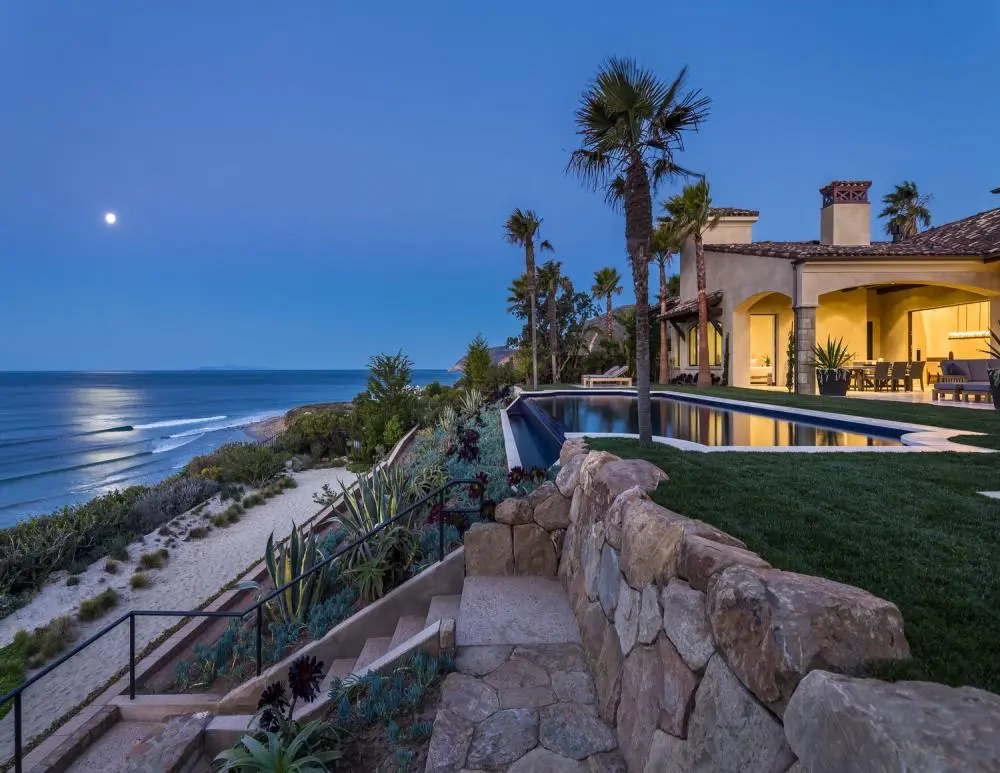
California, founded during the Gold Rush, has transformed into a vibrant hub of innovation and culture. Key landmarks like the Golden Gate Bridge symbolize its rich history. Today, its economy thrives on technology, entertainment, agriculture, and biotech, fostering opportunities in diverse sectors and reflecting a dynamic growth trajectory driven by creativity and resilience.

About California

California is the largest U.S. state economy — ranking among the top global economies by GDP — driven by technology, entertainment, defense and aerospace, agriculture, biotech, ports and logistics, and a deep finance and venture-capital ecosystem. Its 58 counties span dense, very-high-cost coastal metros (Los Angeles, San Diego, Bay Area, Orange County), inland-empire and Central Valley markets at materially lower price points, and rural mountain and desert counties where tax-deed and rural REO inventory is more accessible. Operating conditions are shaped by fast nonjudicial trustee-sale foreclosure under Civil Code Article 1 (§2924 et seq.), the Homeowner Bill of Rights, the Tenant Protection Act (AB 1482) just-cause regime, generous homestead protection under CCP §704.730, an aggressive 2024–2025 wave of borrower-protection legislation (AB 2424, SB 567), and very high property values driving meaningful surplus, equity-recovery, and 2924m owner-occupant bidding dynamics. The result is a market with moderate filing volume but very high per-case dollar value, deep distressed-equity opportunities in the inland and Central Valley, and a competitive, rules-heavy auction environment statewide.

How it works in California

Governing law & venue

  • California Probate Code governs decedents' estates, with administration handled in the Superior Court — Probate Division of the county where the decedent resided.
  • Each of the 58 counties has its own probate calendar; Los Angeles, Orange, San Diego, Santa Clara, and Alameda are the busiest.

Main paths

  • Formal probate (testate or intestate) under Probate Code §8000 et seq. — court issues letters testamentary or letters of administration to a personal representative.
  • Independent Administration of Estates Act (IAEA) under Probate Code §10400 et seq. — most California estates run on full or limited IAEA authority, allowing many actions without prior court order.

Small-estate procedures (post-AB 2016, effective April 1, 2025)

  • Small Estate Affidavit — personal property (Probate Code §§13100–13101) — threshold raised to $208,850 for deaths on or after April 1, 2025 (per Judicial Council Form DE-300).
  • Determination of Succession to Real Property — primary residence (Probate Code §13154) — raised dramatically to $750,000 for the decedent's primary California residence under AB 2016, dwarfing the prior $166,250 threshold.
  • Spousal property petition (Probate Code §13650) — streamlined transfer of property to a surviving spouse without full probate.

Creditors & timing

  • Creditors have 4 months from issuance of letters (or 60 days from actual notice) to file claims.
  • Uncontested formal probate typically takes 9–18 months; IAEA estates can close faster.
  • Contested matters, kinship issues, and accounting objections can extend cases multiple years.

Why it matters for operators

  • The new $750,000 primary-residence pathway under AB 2016 is one of the most consequential probate changes in California in decades — many inherited homes that previously required full probate can now be transferred via streamlined petition, dramatically increasing probate-stage acquisition opportunities.
  • Los Angeles, Riverside, San Bernardino, San Diego, Sacramento, and Bay Area probates routinely include 1–4 family homes with embedded equity and deferred maintenance — a key California deal channel.
  • Always verify the property is the primary residence and confirm any existing trust structure before underwriting probate-stage targets.
See probate services →

Governing law & venue

  • California is a nonjudicial (trustee sale) foreclosure state for nearly all residential mortgages with a power-of-sale clause.
  • Core statute: Civil Code §2924 and the surrounding article (§§2920–2944.10).
  • Foreclosure is administered by the trustee — no court action required for the foreclosure itself.

Pre-foreclosure outreach

  • Civil Code §2923.5 / §2923.55 — servicer must contact the borrower and assess foreclosure-prevention alternatives at least 30 days before recording a Notice of Default.
  • Single Point of Contact (SPOC) required under §2923.7.

Notice of Default (NOD)

  • Recorded in the county where the property sits.
  • Triggers a 3-month cure period under §2924(a)(1).

Notice of Trustee's Sale (NOTS)

  • Recorded after the 3-month period; sale must be at least 20 days after recording.
  • NOTS published, posted, and mailed under §2924f.

Homeowner Bill of Rights (HBOR)

  • Applies to first-lien, owner-occupied 1–4 unit loans (§2924.15).
  • Dual-tracking prohibition (§2923.6, §2924.11) — servicer cannot record NOD/NOTS or hold a trustee's sale while a complete loan-modification application is under review.

AB 2424 — effective January 1, 2025

  • First 45-day postponement: if a valid listing agreement with a licensed broker is delivered to the trustee at least 5 business days before sale, the trustee must postpone the sale at least 45 days (residential 1–4 unit).
  • Second 45-day postponement: if a bona fide purchase agreement is delivered at least 5 business days before the rescheduled sale, the trustee must postpone an additional 45 days.
  • Minimum opening bid: the initial trustee's sale must be at at least 67% of fair market value; if no qualifying bid is received, the sale must be delayed at least 7 days before proceeding without that minimum.

Trustee's sale (auction)

  • Public auction at the courthouse or designated location; cash, cashier's check, or other tendered funds required (§2924h).
  • Beneficiary credit bid allowed up to the total amount due (§2924h(b)).
  • Sale becomes final per §2924h(c) and the post-sale window in §2924m.

Civil Code §2924m — post-auction owner-occupant / eligible-bidder window

  • If the winning bidder is a prospective owner-occupant with a qualifying affidavit, the sale becomes final at fall of the hammer.
  • Otherwise, eligible bidders (owner-occupants, eligible tenant-buyers, mission-driven nonprofits, and certain other categories) may submit overbids via certified mail within structured windows: notice of intent within 15 days, qualifying bids up to 45 days after the sale.
  • An eligible-bidder match at the high-bid amount can displace a non-occupant winning bidder and finalize on the 45th day.

Practical timing & 2025 context

  • Statutory minimum from NOD to trustee's deed: roughly 110–120 days.
  • Real-world timelines often run 6–12 months due to HBOR review periods, AB 2424 postponements, mediation, and bankruptcy filings.
  • California recorded 29,777 foreclosure starts in 2025 — the third-highest in the nation — with the Los Angeles metro at 8,503 starts (ATTOM 2025 year-end report).
  • Activity is concentrated in Riverside, San Bernardino, Los Angeles, Sacramento, and Central Valley counties; Bay Area volumes remain comparatively muted.
See foreclosure services →

Governing law & venue

  • California Code of Civil Procedure: CCP §1161 et seq. governs unlawful detainer actions.
  • AB 1482 — Tenant Protection Act of 2019 (Civil Code §1946.2 and §1947.12) imposes just-cause termination and rent caps on most non-exempt residential rentals.
  • SB 567 — effective April 1, 2024 — tightened no-fault eviction rules (owner move-in and substantial-remodel grounds, with documentation, occupancy, and good-faith requirements).
  • AB 2347 — effective January 1, 2025 — expanded tenant response time in unlawful-detainer cases.
  • Filed in Superior Court of the county where the property is located.

Required notices

  • Nonpayment — 3-day notice to pay or quit under CCP §1161(2). Recent appellate rulings require the notice to clearly state the start and end of the 3-day period; defective notices kill the case.
  • Curable lease violation — 3-day notice to perform covenants or quit (CCP §1161(3)).
  • Incurable breach / nuisance — 3-day unconditional quit (CCP §1161(4)).
  • No-fault termination under AB 1482 / SB 567 — 30-day notice (under one year of tenancy) or 60-day notice (one year or more), with relocation assistance equal to one month's rent for covered tenancies.
  • Section 8 and various local rent-control ordinances (LA, Oakland, Berkeley, San Francisco, San Jose, etc.) impose additional notice and just-cause rules.

Service & filing

  • Notice served personally, by substituted service, or by post-and-mail.
  • Tenant has 5 court days (now extended in many situations under AB 2347) to file an answer.
  • Trial is statutorily expedited, often within 20 days of jury demand.

Hearing & judgment

  • If landlord prevails, court issues a judgment for possession and a writ of possession.
  • Writ executed by the county sheriff; tenants typically receive a 5-day lockout notice before sheriff removal.

Practical timing

  • Clean default unlawful detainer: 4–8 weeks from notice to writ in many counties.
  • Contested cases (especially in LA, Bay Area, and rent-controlled cities): 3–6+ months.
  • Rental relief, COVID-era stays, and local moratoria can extend timelines further.

Why it matters for operators

  • California is one of the most tenant-protective regimes in the country — underwriting must specifically account for AB 1482 just-cause, SB 567 owner-move-in restrictions, and city-level rent control.
  • Notice precision is outcome-determinative — small errors in 3-day notices have repeatedly cost landlords their cases at the appellate level.
See eviction services →

Governing law & venue

  • California Code of Civil Procedure: CCP §§760.010–765.060 — quiet title actions.
  • CCP §760.020 — action may be brought to establish title against adverse claims to real or personal property or any interest therein.
  • Filed in the Superior Court of the county where the property (or any part of it) is located.

Common use cases

  • Tax-deed and tax-defaulted property cleanup.
  • Trustee-sale and 2924m post-auction title disputes.
  • Forged deeds, fraudulent reconveyances, and "deed theft" matters.
  • Adverse possession (CCP §§321–325) and prescriptive easement claims.
  • Co-ownership and partition-adjacent disputes (often paired with CCP §872.210 partition).
  • Stale or expired liens, abstracts of judgment, and reconveyance-of-record issues.

Procedure

  • Plaintiff files a verified complaint with a legal description, names known and unknown claimants, and pleads the basis of title.
  • Lis pendens recorded under CCP §405.20.
  • Known parties served personally; unknown claimants served by publication with court order.
  • Default judgments require a prove-up hearing under CCP §764.010 — California courts will not enter quiet title judgments by simple clerk default.
  • Final judgment is recorded with the county recorder to clear title.

Practical timing

  • Uncontested matters: roughly 6–12 months, longer if publication or guardian ad litem appointments are required.
  • Contested cases (deed fraud, adverse possession, co-ownership): 12–24+ months.

Why it matters for operators

  • Quiet title is the practical bridge between a tax-deed, trustee-sale, or auction acquisition and an insurable, marketable interest.
  • The mandatory §764.010 prove-up means California quiet title is never a paper-default exercise — budgeting time and counsel is essential.
See real estate services →

Federal districts

  • Northern District of California (NDCA) — San Francisco, Oakland, San Jose, Santa Rosa.
  • Eastern District of California (EDCA) — Sacramento, Fresno, Modesto, Bakersfield.
  • Central District of California (CDCA) — Los Angeles, Riverside, Santa Ana, San Fernando Valley, Santa Barbara (the largest bankruptcy court in the U.S. by filings).
  • Southern District of California (SDCA) — San Diego and Imperial counties.

Most common chapters

  • Chapter 7 — liquidation with discharge of unsecured debts.
  • Chapter 13 — 3–5 year repayment plan; widely used to cure mortgage arrears and stop pending trustee's sales.
  • Chapter 11 / Subchapter V — small-business reorganization; relevant to mid-market California operators.

Automatic stay (11 U.S.C. §362)

  • Triggered at filing; freezes trustee's sales, evictions in many cases, garnishments, and most collection activity.
  • Lifts on dismissal, motion for relief, or discharge.
  • California trustee sales are routinely stayed mid-process, especially the morning of the auction — buyers must verify status before tendering funds.

California exemption scheme — elective

  • California is not an opt-out state for federal exemptions; instead, debtors choose between two California systems:
  • System 1 — CCP §§704 series ("704 exemptions") — the homestead-heavy track.
  • System 2 — CCP §703.140(b) ("703 exemptions") — federal-style wildcard available.

Homestead exemption — CCP §704.730 (System 1)

  • Equal to the greater of $300,000 or the prior-year countywide median single-family sale price, capped at $600,000 — with both numbers annually inflation-adjusted.
  • For 2025, the inflation-adjusted floor is approximately $361,076 and the cap is approximately $722,507 (Judicial Council EJ-156).
  • Applies to a primary residence (house, condo, mobile home, or community apartment).

System 2 homestead — CCP §703.140(b)(1) — a much lower amount (~$36,750 for 2025), but it frees a substantial wildcard that can be used on non-residential property.

Why it matters for operators

  • California's homestead is one of the most powerful debtor protections in the country — it materially shifts the math on equity, surplus, and short-payoff strategies, especially in coastal counties where median prices push the cap.
  • Chapter 13 is heavily used in CA to stretch and cure trustee sales, often combined with HBOR claims and 2924m strategies.
  • Always model the borrower's likely chapter, system election, and homestead value before pricing California distressed positions.
Email [email protected]

California by the numbers

Active cases, real recoveries, statewide reach.

  • 58
    California counties served
  • 2,255+
    California cases handled
  • $8.4M
    Recovered in California
  • $103,492
    GDP per capita

From California clients

  • ★★★★★
    “Tampa HQ means they know every Hillsborough judge. Case flew through.”
    Daniela M.
  • ★★★★★
    “IBVC handled our Hillsborough probate from filing to disbursement. Closed in 71 days.”
    Marcus L.
  • ★★★★★
    “Foreclosure surplus claim filed inside the 60-day window. Funds released, no junior lien fights.”
    Sarah K.

How IBVC can help next

Lost a loved one?

Probate Law Group

Verified Florida partner for probate and estate matters.

(813) 600-9717

Own real estate?

Convert ownership to cash

Learn how IBVC turns property interests into same-day liquidity.

Learn more

Licensed professional?

Join the IBVC network

Attorneys, scouts, notaries: send qualified cases, get paid.

Apply